If you’re noticing looser skin, fine lines or changes around your jawline and are researching non-surgical aesthetic treatments, you may have come across both HIFU and botulinum toxin.
Although they are sometimes discussed together, they are not interchangeable treatments. They work in different ways and are generally considered for different cosmetic concerns.
HIFU uses focused ultrasound energy to target selected tissue depths, while botulinum toxin temporarily reduces muscle activity.
So the more useful question isn’t simply, “Which is better?”
It is:
What are you trying to change, and which type of treatment is designed to address that particular concern?
HIFU vs Botulinum Toxin at a glance
| Feature | HIFU | Botulinum toxin |
|---|---|---|
| Main approach | Focused ultrasound energy | Temporary reduction of muscle activity |
| Common cosmetic concern | Skin laxity and loss of firmness | Certain expression-related facial lines |
| Involves injections? | No | Yes |
| Main mechanism | Controlled ultrasound energy delivered at selected depths | Reduces nerve signals involved in muscle contraction |
| Results | Generally develop progressively | Usually become apparent over days |
| Downtime | Usually limited, although temporary reactions can occur | Usually limited, although bruising or other reactions can occur |
| Suitable for everyone? | No – assessment is important | No – requires appropriate prescribing and assessment |
| Surgical facelift replacement? | No | No |
The table is a starting point rather than a treatment recommendation. Suitability depends on factors such as your skin, anatomy, medical history, expectations and the treatment being considered.
If you are considering HIFU, the appropriate next step is an individual consultation to establish whether it is suitable for you.
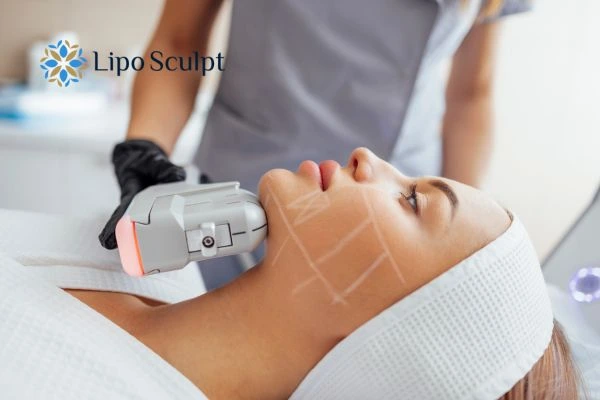
What is HIFU?
HIFU stands for High-Intensity Focused Ultrasound.
In aesthetic treatment, focused ultrasound energy can be delivered to selected depths beneath the surface of the skin. The resulting thermal effect is intended to stimulate a wound-healing response and changes associated with collagen remodelling.
Research into microfocused ultrasound has found evidence of improvement in facial skin tightening and rejuvenation, particularly in people with mild-to-moderate skin laxity. However, studies have used different devices, treatment protocols and outcome measures, so results should not be presented as identical for every person. [1][2]
HIFU is therefore better thought of as a skin-tightening and rejuvenation treatment rather than a replacement for surgical lifting.
What concerns might HIFU be considered for?
Depending on the treatment area and device being used, HIFU may be considered where someone is concerned about:
- Mild to moderate skin laxity
- Loss of firmness
- A less defined jawline
- Mild sagging around the lower face
- Certain signs of facial ageing
The important word is mild to moderate.
If there is substantial excess skin, significant tissue descent or a desire for a major structural change, a non-surgical treatment may not provide the result someone is hoping for.
A responsible consultation should establish this before treatment rather than promising that HIFU can achieve a surgical-style lift.
How does HIFU work?
Unlike a cream or superficial facial treatment, HIFU is designed to deliver focused ultrasound energy beneath the skin.
The precise depth and energy used depend on the device, treatment area and treatment protocol.
The body’s response to controlled thermal injury is part of the proposed mechanism behind subsequent tissue remodelling and collagen-related changes. See: Before and After Of HIFU
The evidence suggests that improvements can develop over time rather than appearing as a dramatic transformation immediately after treatment. [1][2]
This is one reason why before-and-after comparisons should always take the timing of photographs into account.
Is HIFU painful?
There isn’t one universal answer.
Some people describe HIFU as warm, prickly or uncomfortable, while others find particular areas more sensitive.
Published research has described HIFU/microfocused ultrasound as moderately painful in some treatment settings. Pain can vary according to the treatment area, device, settings and individual sensitivity. [2][3]
This is an important correction to the idea that HIFU is always “painless”.
If you’re considering treatment, ask what sensation is normally expected for the particular area being treated and what measures may be available to make the procedure more comfortable.
What side effects can HIFU cause?
HIFU is non-surgical, but non-surgical does not mean risk-free.
Temporary effects can include:
- Redness
- Swelling
- Tenderness or discomfort
- Bruising
- Temporary altered sensation
Published reviews have also reported less common adverse events, which is why appropriate treatment technique, patient selection and knowledge of facial anatomy matter.
If you experience an unexpected or persistent reaction after treatment, contact the practitioner who treated you and seek appropriate medical advice where necessary.
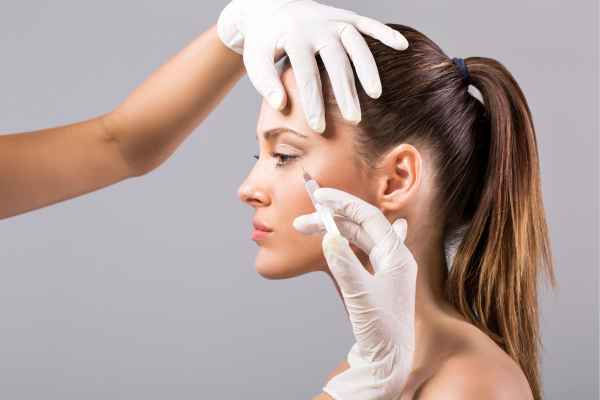
What is botulinum toxin?
Botulinum toxin is a prescription-only medicine in the United Kingdom.
“Botox” is a brand name associated with a botulinum toxin product. Different botulinum-toxin products have their own product information and licensed indications.
Botulinum toxin works by temporarily reducing nerve signals involved in muscle activity. For certain facial lines, reducing the activity of selected muscles can reduce the appearance of lines associated with repeated facial movement.
This is fundamentally different from HIFU.
HIFU is primarily concerned with delivering focused ultrasound energy to selected tissue depths, whereas botulinum toxin acts on muscle activity.
Because botulinum toxin is a prescription-only medicine, it should not be presented or promoted to the public in the same way as an ordinary beauty product. Any prescribing decision requires appropriate clinical assessment.
HIFU and botulinum toxin address different concerns
This is probably the most important point in the whole comparison.
Imagine two people.
Person A is mainly concerned that the skin around their lower face has become less firm and slightly lax.
Person B is mainly concerned about lines that become more noticeable when they repeatedly frown or make certain facial expressions.
Those concerns aren’t the same.
The first person may want to discuss a skin-tightening approach.
The second may need to discuss a treatment that targets muscle activity.
That doesn’t automatically mean either treatment is right. It means the starting point for a proper assessment should be the underlying cosmetic concern, rather than the name of a popular treatment.
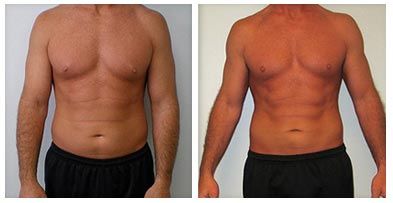
Which treatment is better for loose skin?
If the primary concern is skin laxity, HIFU may be a treatment worth discussing where the degree of laxity is appropriate.
However, expectations matter.
HIFU cannot remove large amounts of excess skin. It should not be presented as equivalent to a surgical facelift, particularly where there is substantial skin excess.
Research supports the potential for improvement in facial skin tightening, but results vary and the evidence does not support promising a particular degree of lifting to every individual.
A consultation can help establish whether the degree of skin laxity is appropriate for a non-surgical approach.
Which treatment is better for expression lines?
Expression-related lines are associated with repeated movement of facial muscles.
Botulinum toxin can temporarily reduce the activity of selected muscles and is licensed for specific facial indications depending on the product. [5][6]
However, because botulinum toxin is prescription-only, the decision to prescribe and administer it needs to follow an appropriate healthcare assessment.
It should not be treated like an ordinary beauty product.
If your main concern is skin laxity rather than muscle-related expression lines, HIFU may be more relevant to discuss with a suitably qualified practitioner.
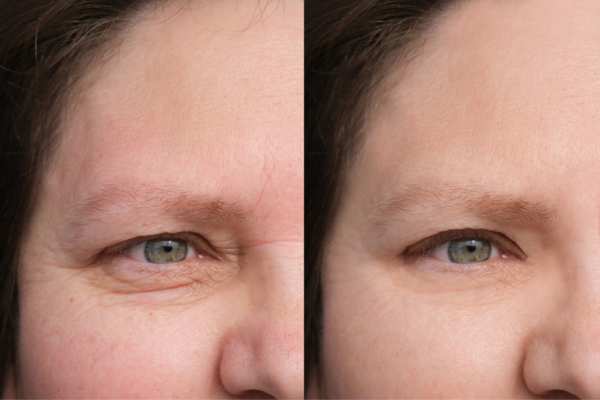
How long do HIFU results last?
This is one area where online aesthetic information can become misleading.
You may see claims that HIFU “lasts two years” or produces guaranteed long-term results.
The evidence is more nuanced.
Some research suggests that the effects of HIFU may continue for an extended period, but results vary between studies and treatment approaches. Evidence on precisely how long the effects last remains limited.
Your skin also continues to age after treatment.
Therefore, it is more accurate to say that HIFU may produce improvements that persist for an extended period, but the duration and degree of improvement vary between individuals.
Is HIFU suitable for everyone?
No.
A consultation should consider:
- Your medical history
- The area being treated
- The condition and degree of skin laxity
- Your expectations
- Previous cosmetic treatments
- The treatment device and protocol
- Any relevant contraindications or precautions
A good consultation should also include the possibility that HIFU is not the appropriate treatment.
That may be frustrating to hear, but it is considerably more useful than being told that every customer is an ideal candidate.
What about significant loose skin?
This is an important distinction.
Non-surgical skin-tightening treatments may be appropriate for selected degrees of laxity, but they cannot physically remove substantial excess skin.
If someone has significant skin excess or expects a dramatic lifting effect, they may need to discuss surgical options with an appropriately qualified medical professional.
A responsible aesthetic provider should explain this rather than trying to fit every concern into the treatment they offer.
Can HIFU and botulinum toxin be used together?
“Yes, combining HIFU and Botox can meet special goals very well.”
Different aesthetic treatments can sometimes be combined because they act on different structures.
However, whether combining treatments is appropriate depends on the individual’s anatomy, medical history, previous treatments, treatment areas and overall plan.
It should therefore be treated as a clinical suitability question, not as a standard package that everyone needs.
For anyone considering HIFU, the priority should be establishing whether the treatment is appropriate on its own or whether another approach would be more suitable.
What should you ask before having HIFU?
Before agreeing to treatment, don’t be afraid to ask detailed questions.
The NHS recommends asking about the practitioner’s qualifications and training, experience with the procedure, possible complications, aftercare, costs and what happens if something goes wrong. [7]
For HIFU, useful questions include:
- What exactly are you treating in my case?
- How much skin laxity do you think I have?
- What improvement is realistically achievable?
- Which device will be used?
- Why is that device and treatment approach appropriate for me?
- What side effects should I expect?
- What complications should I know about?
- How long should I wait before judging the result?
- What happens if I don’t get the improvement I hoped for?
- Would another treatment or medical assessment be more appropriate?
A practitioner who is willing to explain limitations is usually giving you more useful information than someone who simply promises a dramatic result.
When should you seek medical advice instead?
Cosmetic treatment should not be used as a substitute for investigating a new or unexplained medical problem.
If you have a new lump, rapidly changing skin lesion, unexplained swelling, persistent pain, neurological symptoms, significant skin changes or another symptom that concerns you, seek appropriate medical assessment rather than assuming it is simply an aesthetic issue.
Likewise, if you’re unsure whether a change in your appearance is normal ageing or something that needs medical attention, speaking to your GP or another appropriate healthcare professional is sensible.
So, which is better: HIFU or botulinum toxin?
There isn’t a single answer.
HIFU and botulinum toxin work differently and are generally used to address different cosmetic concerns.
HIFU may be considered where the main concern is a suitable degree of skin laxity and loss of firmness.
Botulinum toxin is designed to temporarily reduce selected muscle activity and is used for specific indications under prescription.
The right choice therefore depends less on which treatment is “better” and more on what you are actually trying to change.
For someone considering HIFU, the most useful next step is a proper assessment of the skin, treatment area and expectations.
A realistic final thought
Non-surgical does not mean risk-free, painless or capable of producing the same result as surgery.
And no responsible practitioner should promise that a particular treatment will make someone look a certain number of years younger.
The better way to approach aesthetic treatment is to understand what the treatment can realistically change, what it cannot change, what the risks are and whether those potential benefits are worth it for you.
That is the information you should have before making a decision.
FAQS
Q: Is HIFU the same as botulinum toxin?
No. They work through different mechanisms. HIFU uses focused ultrasound energy and is generally discussed in relation to skin tightening, while botulinum toxin temporarily reduces selected muscle activity.
Q: Is HIFU painful?
It can be uncomfortable. People experience treatment differently, and published research has reported moderate pain in some HIFU treatment settings.
Q: Can HIFU replace a facelift?
No. HIFU is a non-surgical treatment and cannot remove substantial excess skin or reproduce the structural changes achieved by surgery.
Q: What should I ask before having HIFU?
Ask who will perform the treatment, what training they have, which device will be used, what result is realistically achievable, what the risks are, what aftercare is provided and what happens if the result isn’t what you expected. The NHS recommends asking about qualifications, experience, complications, aftercare and what happens if something goes wrong.
Q: How long does HIFU take to work?
Improvement is generally assessed over time rather than relying on an immediate result. Research has assessed changes at several months following treatment, and individual response varies.
Q: How long can HIFU results last Scotland?
The duration of HIFU results varies from person to person. Some people may continue to see improvements for many months, although the longevity can depend on factors such as the treatment used, individual response and the natural ageing process.
Q: Can HIFU get rid of wrinkles?
HIFU may improve the appearance of some wrinkles and skin laxity, but it isn’t designed to work in exactly the same way as a treatment that reduces muscle activity. The result depends on the type and severity of the lines and the individual’s skin.
Q: Is HIFU suitable for severe loose skin Scotland?
Not necessarily. HIFU is generally more appropriate for selected degrees of skin laxity. Significant excess skin may require discussion of surgical options rather than a non-surgical treatment.
References
[1] Ling J, Zhao H. Micro-focused Ultrasound for Facial Rejuvenation and Tightening. Aesthetic Plastic Surgery, 2023. PubMed
[2] Contini M et al. Microfocused Ultrasound for Facial Skin Tightening. International Journal of Environmental Research and Public Health, 2023. PubMed
[3] Alam M et al. Microfocused Ultrasound for Skin Laxity and Lower-Face Tightening. Aesthetic Surgery Journal. PubMed
[4] Humphrey VS et al. Microfocused Ultrasound: Adverse Events and Safety. Dermatologic Surgery, 2025. PubMed
[5] Electronic Medicines Compendium. BOTOX 200 Allergan Units – Summary of Product Characteristics. emc
[6] Electronic Medicines Compendium. BOCOUTURE 50 Units – Summary of Product Characteristics. emc
[7] NHS. Choosing Who Will Do Your Cosmetic Procedure. NHS
[8] ASA/CAP guidance concerning Botox and non-surgical cosmetic interventions. ASA/CAP
For More Information, please call us today on 03300101799